Joani Blank’s Femalia

IMG_20160821_114648

3.5 Stars

I came across Femalia by Joani Blank while reading CUNT by Musico. Feminists have been advocating this book for men and women for years to help shape people’s perspectives about their own bodies and the bodies of their partners. Femalia consists of 50 photographs of the female vulva. The purpose of this book is to show males and females that the vulva comes in many different variations and they are each perfectly formed. Sadly, some women are uncomfortable with their ladybits and worry that it doesn’t “look right.” But where do we get our expectations of what a vulva should look like? Porn? Male-dominated conversations and opinions? Women body-shaming each other? I’m sure there’s another book out there that discusses these points. However, Femalia‘s only goal lies in the photographs. There is no denying that each woman is unique and it is the hope of Blank that when men and women view these photographs they will be more comfortable with their own bodies and the bodies of their partners.

I decided to purchase this book solely on the recommendations I came across while reading feminist texts. Truthfully, the only vulva I’m intimately acquainted with is my own. There are also depictions in pornography, but we know some of those women get labiaplasty surgery to make their vulva more “acceptable.” Hearing all of this is disconcerting, especially when (as far as being a straight woman is concerned) I consider my own to be “normal” but it’s also all I know. Taking that into consideration, I decided to purchase this book and I have to agree with my fellow feminists and concur that all women should know the many different shapes and colors and variations of other women’s bodies. This way, when we hear people shaming or criticizing their own bodies or the bodies of others, we can present them with the facts. After all, if all female bodies have it, how can it be “unfeminine,” or “ugly,” or “not right looking.” We live in a society where a mom tweets a picture of sandwiches to compare her daughters “vaginas” to that of Taylor Swift. Someone never told that woman that vaginas (and by vaginas, I mean vulvas) don’t work that way. Hopefully, someone will inform her daughters. (Check out the tweet HERE and read the comments for a good laugh.)

If this review teaches you anything, it’s that the outside ladybits is the vulva; and the inside is the vagina. I never cared enough to make the distinction since “vagina” is our society’s default word for lady parts, but Blank’s book has made me change my mind, and I hope to change all of your minds! If we cannot correctly name and label our bodies, how do we protect and love ourselves, thus teaching our partners to do the same? Language holds power over us. It gives us agency and allows us to empower ourselves. Let’s not take for granted that empowered women empower women.

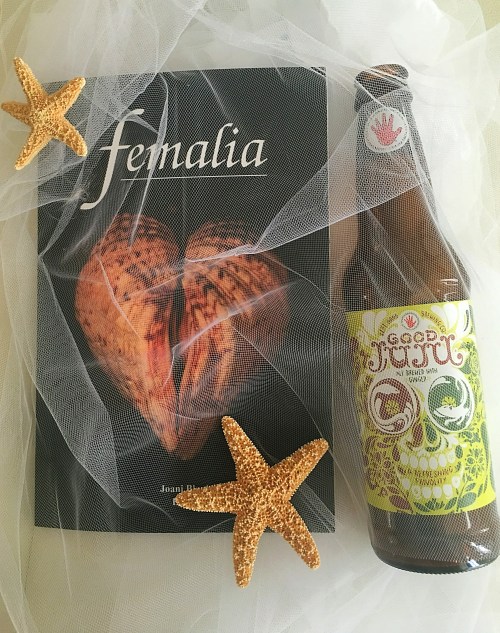
I’m pairing this book with Good JuJu by Left Hand Brewery because all vulvas are good juju. This beer has a crisp, fresh hint of ginger that is refreshing and light.

Format: Paperback.

JK Rowling, John Tiffany and Jack Thorne’s Harry Potter and the Cursed Child

IMG_20160805_072203

5 Stars!

Warning: This review contains minor spoilers.

For all the people who are criticizing this book because they were expecting a full-fledged novel, they need to chill. This book is written by three people. It is a screenplay. It is not your typical, traditional Harry Potter story. Because it is a screenplay, I thought I wouldn’t be able to immerse myself in the narrative the same way I would with fiction. I was pleasantly surprised that this was not the case. Once I got into this book, I could not stop. The world of Harry Potter is so rich and multifaceted, it’s hard to not love the story.

When I first heard about this book, I wondered how 19 years in the future would look as far as the narrative of conflict; Harry was constantly battling Voldemort and his Death Eaters. Who was this new character, Albus, supposed to have a conflict with? How was it going to hook us? Well, ingeniously, they decided to go into the past. Instead of creating some new and necessary evil, they try to take us back to right a wrong, to fix the grievance. The reason I’ll argue that this worked so well is because we get to encounter all our most beloved and most hated characters. Permitting the reader to go back in time, allows us to meet these wonderful and wonderfully awful characters, which brings about a sense of nostalgia and makes us recount all the feelings we had while reading the previous Potter books. There are certain tropes and scenes throughout the play that are reflective of the Potter series as a whole. They make the reader remember the previous books and it serves to highlight the enjoyment of this new addition. Case in point: in the third book when the dementor comes after Harry, as he is being attacked, he hears his mother’s scream; and it is haunting. In The Cursed Child, Harry, at forty-something years old, has to hear that scream again and it is devastating. It’s moments like these that made me love this book.

Now, some argue that this play is too much like bad fanfiction. For the people insisting that this is too much like a fanfiction, let’s be clear: it is not a fan fiction. Period. JK Rowling approves this message. This is the path Rowling decided the story should take; therefore it cannot be a fanfic. Those who are insisting it is a fanfic simply do not want to accept that this is the path the author has chosen for these characters. Perhaps, also, it is their first time reading a screenplay. It’s easy to see how presenting the story in this medium could make it difficult for the reader and impede them from fully appreciating it. That being said, it is well-written and the characters are fleshed out. So, if anything, it’s good fanfiction.

In conclusion, I adored this book. It was a great installment for the Potter series and a fun bonus read. There was enough wit and courage and tears that made this book genuine. I don’t want to give too many spoilers away, but there were certain scenes involving old and new characters that will make you catch your breath in sorrow or in glee. Ron remains the humorous one; Hermoine the smart one, and Harry, well; he’s the one who never fights alone.

Some of my favorite quotes:

Draco (referring to his wife): she made being brave very easy, your mother.

Scorpius (showing bravery and selflessness worthy of Gryffindor): The world changes and we change with it. I am better off in this world. But the world is not better. And I don’t want that.

Draco (speaking to Harry about their sons): We have to find them – if it takes centuries, we must find our sons”

Harry (responding to Draco): love blinds. We have both tried to give our sons, not what they needed, but what we needed.

Harry (this line is easily the one that encompasses what the entire Potter series is about): I’ve never fought alone, you see. And I never will.

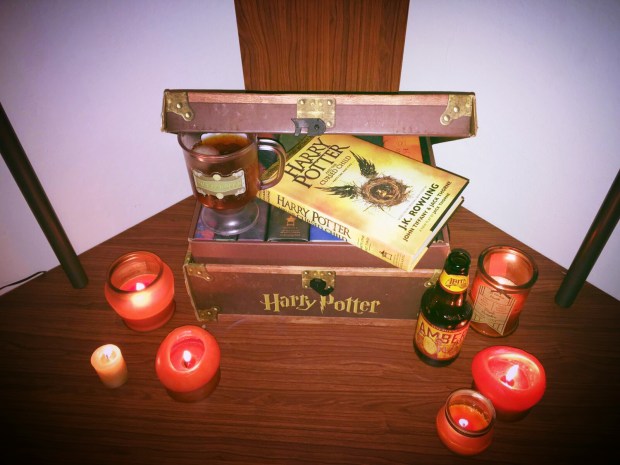
I read this book while listening to the movie soundtracks to increase the magic and my reading pleasure. I was originally going to make a copycat alcoholic Butterbeer recipe (find those in link below). When we think of drinks in the Wizarding World, it’s limited to Butterbeer, Pumpkin juice and ginger beer. While we can certainly make DIY copycat recipes, I wanted to find a beer that had a nice caramel, buttery, sweet flavor reminiscent of Butterbeer but more grown up (aka:with a good deal of hops). Three liquor stores later, I found Abita ‘s Amber and it is the perfect pairing for this book. Amber is a Munich style lager brewed with pale and caramel malts. It has a smooth, malty, lightly caramel flavor and a rich amber color that will remind you of the Wizarding World of Harry Potter’s Butterbeer without being too sweet. It’s the perfect beer for this read, so go pick up a bottle and get to reading Harry Potter and the Cursed Child!

Butterbeer recipes: Here
Format: Hardcover.

Mary M. & Bryan Talbot’s The Red Virgin and the Vision of Utopia

IMG_20160801_225728

4.0 Stars

The Red Virgin and the Vision of Utopia recounts the life of French feminist and anarchist Louise Michel. The narrative is structured as a frame tale, in which American feminist Charlotte Perkins Gilman is told the history of Michel’s work by a few women who knew her. This graphic novel explored the idealism of the Paris Commune of the 1870s and the optimistic futurism that was being displayed in the current literature.

Once I started reading, I had to stop and brush up on my French history (Joke’s on me, guys. There are annotations at the back of the book that I completely missed). Louise Michel and her revolution were fighting for the people of Paris after the fall of Napoleon III. They took over the city of Paris and tried to create a utopia where there was free marriage, in which men no longer held proprietary rights over women; equal education, where children and women could be educated and have jobs so that all classes of people had food on their tables.

This revolution was eventually taken down by the French army. The slaughter is known as the “Bloody Week” due to the thousands of France’s own people who were killed. Louise Michel was arrested and her most famous quote came the day she stood trial. She stood before the committee and said, “Since it seems that any heart that beats for liberty has the right only to a small lump of lead, I demand my share. If you let me live, I will not stop crying for vengeance, and I will denounce the assassins on the Board of Pardons to the vengeance of my brothers. If you are not cowards, kill me!” Although she dared them to execute her for her revolutionary ideals, she was deported. She spent two years in prison and seven in deportation before returning to France to continue her work.

There is one particular scene in the comic that is striking. It takes place during Michel’s deportation. The story is being recounted to the American feminist of how Louise Michelle helped the local indigenous people rise up against the white colonizers. The American feminist starts to say “you mean, she helped those nig-? I mean, she didn’t stick with her own kind?” At this point, Michel’s friend who is telling the story explodes, yelling “her own kind you say? She was sticking with her own kind! She stuck with the indigenous people, just as she always stuck with the oppressed! Just as she did with the rebellious, oppressed and then defeated people of Paris. They were fighting the same fight.”  What is important to take away from the scene is that so many of us American and feminists, forget that the feminist movement, in particular, Susan B Anthony, did not want the black man to have the right to vote before the white woman. Racism and classism was still very much an accepted norm. Yet, here we have the story of a 19th-century French woman, who defies those norms. That being said, we know how colonialism works. The white colonialist pitted tribe against tribe and there was massacre after massacre. Michel wrote to her friend, Victor Hugo, asking for his help and sent documents to the French newspapers exposing the massacre in the colony. This type of revolutionary, activism from a woman – a woman with no power, remember, she is a prisoner. She has been deported. But time and again she is reaching out to help those groups in need. And when she cannot help them, she exposes their oppressors.

While she is hailed as the “French grande dame of anarchy”, her real legacy lays in the Labour movement and women’s rights. Michel was decrying poverty in theoretical essays long before it was recognized as a problem. She was a school teacher, medical worker and revolutionary. After coming back to France she was continually in and out of prison, always giving lectures and writing essays on the Social Revolution. She was shot in the head for her words, and thankfully survived, although some reports say she had remnants of the bullet in her head. She continued her work until her passing at age 74.

The graphic novel format made this fun to read. It’s always nice to have history and feminism presented in a non-traditional style. The art was simple but striking.

Some of my favorite quotes are as follows:

“Knowledge, it must be presented in a manner that enlarges the horizon instead of restricting it. Girls are given a pile of nonsense supported by childlike logic, while at the same time boys have to swallow little balls of science until they choke. For both of us, this is a ridiculous education. Education can provide not only an avenue to economic independence, but also a means to hasten the recognition of women’s rights.”

“Let’s run into the red teeth of the chattering machine guns, the ash blowing around us like black butterflies!”

“I have seen criminals and whores and spoken with them/now I inquire if you believe them made as of now they are,/to drag their rags in blood and mire,/preordained an evil race./You to whom we are all pray, have made them what they are today. ”
(Ok, doesn’t that remind you of Drew Barrymore in Ever After when she says “first you make thieves and then punish them”? Well, now we know who said it first.)

I’m pairing this book with Left Hand‘s Milk Stout Nitro. I was originally going to get a light French lager but this graphic novel was dark and moving, so I opted for the rich, stoutly sweet taste of this beer. The mild coffee aromas coupled with the sticky sweetness of the beer perfectly matched the mood and tone of this novel.

Format: Hardcover.

Nick Hornby’s Funny Girl

IMG_20160731_115338

3.5 Stars

Few if any authors capture obsessive and hapless male characters as well as Nick Hornby, so I was hesitant to start Funny Girl after picking up my copy because Hornby tries to capture female characters as well but often falls a little flat.  It was a wonderful surprise for me at how wonderful Hornby’s titular funny girl, Sophie Straw, really is.  Born Barbara Parker, the character is funny, charismatic, and sublimely well rounded.  After winning the Miss Liverpool title in the first few pages of the book, Barbara realizes that isn’t the life she wants. She relinquishes the title and runs to London where she wants to be the next Lucille Ball.

Barbara, now going by the stage name Sophie Shaw goes to read for a BBC comedy and the writers fall in love with her presence and rewrite the script around her.  At this point Hornby takes his only misstep, a pretty large one, he shifts the story from not just Sophie but to the two writers Tony and Bill, the producer Dennis and even her costar Clive.  It’s sad because Sophie is such a wonderful character but also understandable as Hornby starts to tackle a lot more than just a quirky sitcom star.

The setting is 1960s London where homosexuality is a crime, a woman is just meant to look good and find a man, and comedy is viewed as an inferior form of  entertainment. Hornby uses Sophie’s small town upbringing as a contrast with the views of the optimistic and worldly Dennis and the jaded Clive.  The big reason for the shift is we see this world through the eyes of Tony a bisexual who has opted to be happy in the marriage to his wife June while Bill struggles with both his homosexuality, as well as his desire to create something society deems as real art.

Hornby manages to discuss a lot of serious issues such as sexuality, sexism, repression, elitism, and so much more all while still giving a fun, enjoyable read.  Even with all their faults and failures, he loves these characters that he has created but none more than Sophie. “She wasn’t the sort of catch one could take home and show off to people; she was the sort of catch that drags the angler off the end of the pier and pulls him out to sea before tearing him to pieces as he’s drowning. He shouldn’t have been fishing at all, not when he was so ill-equipped.” That line wasn’t just about a potential male suitor, but all the guys that encounter her as she is the catalyst for where their lives go from here.

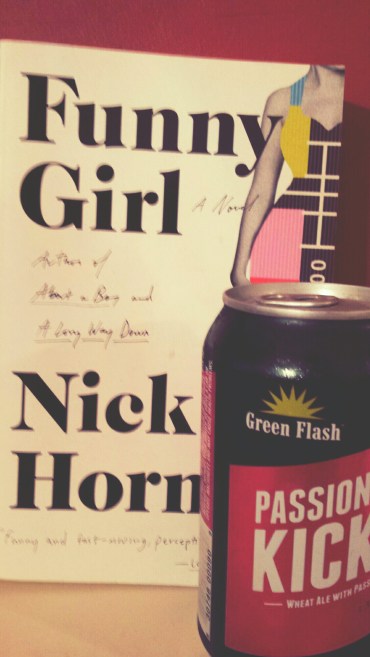
I decided to pair this book with Passion Fruit Kicker by Green Flash Brewery.  I don’t usually drink wheat or fruit beers, so it felt appropriate for such an ambitious novel from Hornby.  It helps that this new experience in both beer and novel came from consistent favorites in Green Flash and Nick Hornby.

Format: Trade Paperback

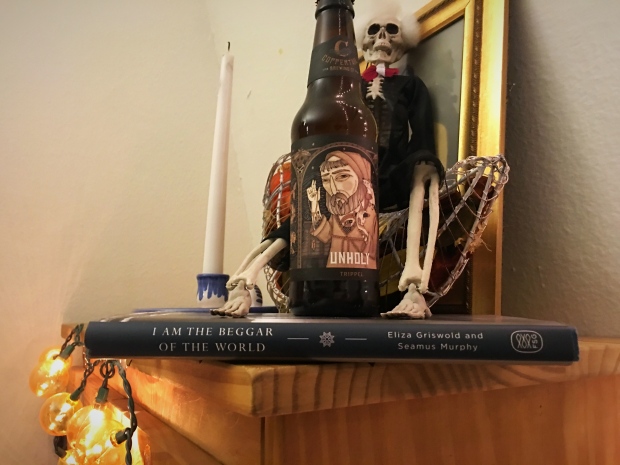
I Am the Beggar of the World: Landays from Contemporary Afghanistan

Translated By: Eliza Griswold
Photographs By: Seamus Murphy

5.0 Stars

IMG_20160726_005026

Landays are two line poems that have always been an oral tradition in Afghanistan. If you’ve read Khaled Hosseini’s A Thousand Splendid Suns or Malala Yousafzai’s I Am Malala then you’ve unwittingly read Afghan Landays. Landays are deeply embedded in the oral traditions of womenfolk in this region of the world. The couplets are passed down and around from woman to woman. They speak on Love, Grief, Separation, War and Homeland. The most important aspect of this tradition is that it is anonymous. In a region where women can be punished for speaking out against the societal norms and for even writing poetry, they subvert the patriarchy by spreading anonymous oral poetry, Landays.

After learning of a teenage girl who was forbidden to write poems and burned herself in protest, journalist Eliza Griswold and photographer Seamus Murphy journeyed to Afghanistan to investigate her death and explore the role Landays play in contemporary life. The poems they put together in this book are accompanied by more than fifty photographs, collectively expressing rage, love, war, despair, and humor; belying the misconception of women being servile mutes behind their burqas.

IMG_20160726_005205

I found these Landays to be passionate and clever. The couplet form allows for a concise expression of thought. A few of my favorites are as follows:

“When sisters sit together, they always praise their brothers. / When brothers sit together, they sell their sisters to others.”

“You sold me to an old man, father. / May God destroy your home; I was your daughter.”

“In my dream, I am the president. / When I awake, I am the beggar of the world.”

“Widows take sweets to a saint’s shrine. / I’ll bring God popcorn and beg him to take mine.”

“Separation, you set fire / in the heart and home of every lover.”

I chose to pair this book with Coppertail Brewing‘s Unholy Trippel, a Belgo-American Trippel that finishes smoothly and is immensely drinkable. There are hints of citrus and fruit that make for a nice finish.

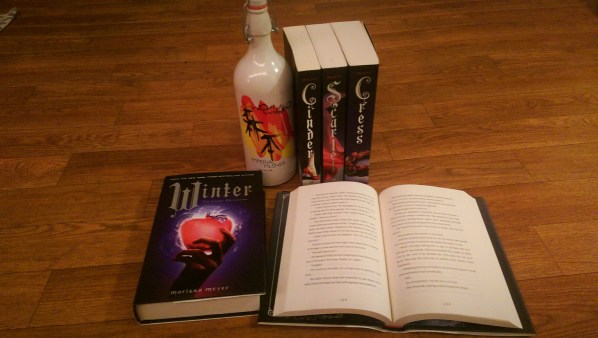
Marissa Meyer’s The Lunar Chronicles

IMG_20160722_154403

4 .0 Stars

This series was incredibly enjoyable. All the books in this series are retellings of fairy tales in a sci-fi-esque future. All their stories intertwine to create a riveting and awesome adventure. Cinder is a super rad protagonist. By her name you can imagine that she is a reimagined Cinderella. She is a funny, sarcastic, and spunky cyborg mechanic. She is a great feminist, actually, all the female leads are great feminists.( I also love Iko! She is hilariously fantastic. Wolf and Scarlet make my heart ache. ♥)

As a brown girl, it is refreshing to read a Young Adult series where all of the characters are not white by default. I grew up reading books with white characters and always found it difficult to imagine myself as one of the characters, to relate to, or fully indulge myself because of this sometimes. Thank you, Marissa Meyer, for doing what all these other Young Adult authors whom I have read seem to be unable to do; and that is to make a diverse group of characters. Not only personality wise but ethnically too (Interracial love! YAY). This really made it great for me. Not only are there various races but also people from different planets, androids, and cyborgs. It’s great. It might not concern many readers but diversity is something I look for in my books. I’m excited for all the nonwhite teens who will read this and think, “Yaaasss Princess Winter is Black like me!” or “Cinder is Asian like me! Finally!” Ok, I’m done.

Although some stuff was predictable there are still numerous surprises and you won’t even breathe from anticipation, once you get towards the end. I was excited to see what happened after each installment. I am so sad that it’s over. I  might just read the entire series again!

I definitely see various tidbits that were inspired by Sailor Moon in the series which makes the fangirl in me squeal.

I paired this series with Rogue‘s Morimoto Imperial Pilsner. This beer starts off tasting sweet with a floral scent and finishes with a somewhat bitter taste (not too harsh) that reminds me of Cinder’s “take no shit” attitude.

List of the books in the series, in order of release:
Cinder
Scarlet
Cress
Fairest
Winter

Formats: Paperback. Hardcover.

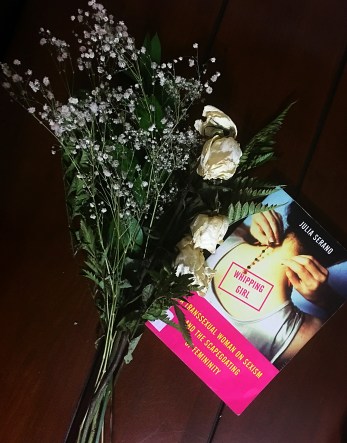
Julia Serano’s Whipping Girl: A Transsexual Woman on Sexism and the Scapegoating of Femininity

IMG_20160711_1219105.0 Stars

Serrano’s Whipping Girl is a very personalized and informative discussion on gender identity. Serrano explains the language of gender and the many factors that make up our expectations of gender. Serrano goes into length about femininity, trans-misogyny, and sexism. She explores what it means to be a transwoman and how they are treated. Her knowledge coupled with her clear writing style makes this book an enjoyable read. It is the best educational text for trans-allies or anyone hoping to learn a little more about the people around them. At times, I found all the new language overwhelming. It makes me a little nervous thinking and learning about these issues as a trans-ally. If it’s so confusing for me, how do I advocate effectively for the community that I support? So much about the LGBTQ is based on ignorance and misunderstanding. The ongoing battle to change or enlighten people’s pre-established biases is frustrating.

Quotes: “It is no longer enough for feminism to fight solely for the rights of those born female.”
“And while we credit previous feminist movements for helping to create a society where most sensible people would agree with the statement ‘Women and men are equals,’ we lament the fact that we remain light-years away from being able to say that most people believe that femininity is masculinity’s equal.”

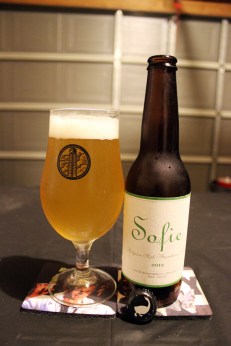
I’m pairing this book with Goose Island’s saison, Sofie. I love saisons and this style alesofie drinks pleasingly when reading a book that will leave you feeling confused but informed. Oh, the things you didn’t know you didn’t know. Let your beer be a comfort to you as you try to sort out cissexuals, oppositional sexism, traditional sexism, gender hierarchies and femininity in feminism. Good luck!

Beer Photo Credit: Beer Metal Dude
Format: Paperback.

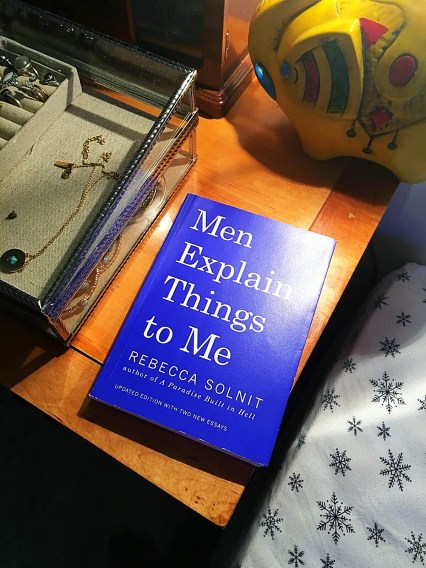
Rebecca Solnit’s Men Explain Things to Me

IMG_20160706_011747

5.0 Stars

When I chose this book I thought it seemed like it would be hilarious. I was assuming it was just a humorous spoof of a book. I was pleasantly surprised that it was much more than that.

Solnit says it best herself, “when I sat down and wrote the essay ‘Men Explain Things to Me,’ here’s what surprised me: though I began with a ridiculous example of being patronized by a man, I ended with rape and murders.”

Solnit’s essays encompass more than just the basic “mansplaining” that most women are familiar with. She gives us a brief look into the history of gender roles and the concealment women have struggled with and how feminism has done much to help us walk a road toward equality.

Roxane Gay’s Bad Feminist has been touted as the perfect “intro to feminism” text, but I believe Rebecca Solnit’s essays in this book give a vastly more comprehensive look into the lives and struggles of women and in explaining the importance feminism has played in giving us a road to equality.

unnamedFunky Buddha‘s Floridian Hefeweizen pairs nicely with this book. This golden brew has aromas of bananas, citrus, and cloves that lends a calming haze while drinking it.

Beer Photo Credit: Columbus Beer Scene
Format: Paperback.

Junot Diaz’s The Brief Wondrous Life of Oscar Wao

IMG_20160616_173639

3.2 Stars

There are a shitload of footnotes, let us just get that out of the way. Also, if you can’t roll with lingo you don’t understand or have to look up, then you’re probably going to be annoyed with this novel.

I dug The Brief Wondrous Life of Oscar Wao. I feel as if this story is the Dominican Republic’s One Hundred Years of Solitude or our House of the Spirits; it is a text that encompasses a nation, its culture, and its people.It’s about three generations of a family that desperately tries to get away but cannot escape the “fuku,” which is in layman’s terms, a curse. I liked that Diaz included some information on the D.R.’s history and of Trujillo. I feel like many people around the world do not know much about this country but need to in order to understand this family. And for us Dominican readers, seeing our slang words, cultural sayings and history in a novel is great and gives a sense of solidarity.

I think this book is more than Oscar wanting to get laid, which is basically the gist of this novel but there is also so much more.  That being said, I found Oscar to be hella annoying. Jesus Christ, I wanted to beat the shit out of this kid. I understand, it’s hard not fitting into the expectations your culture, people and family have set for you but damn, do you really have to be that whiny? I enjoyed everyone else’s stories and histories except for Oscar. Really, every other character was more interesting than him. I loved reading the female voices in the novel and would have probably liked the book better if the book were about them and had Oscar as a side character.

All in all, it was a decent read. (Also, I have to represent the Dominican writers, especially since there are so few of them in the mainstream, American literary game.)

Quotes: “It’s never the changes we want that change everything.”

“For the rest of his short life he existed in an imbecilic stupor, but there were prisoners who remembered moments when he seemed almost lucid, when he would stand in the fields and stare at his hands and weep, as if recalling that there was once a time when he had been more than this.”

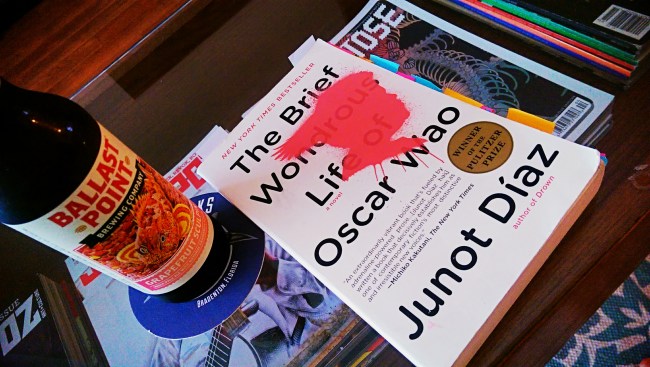
I chose to pair this novel with Ballast Point‘s Grapefruit Sculpin because it is a great combination of old and new flavoring, much like Diaz weaves old school Dominican culture with new. Citrus flavoring and hops are usually always a win and the slightly bitter aftertaste is there to remind you it’s an IPA (in case you forgot due to the awesome grapefruit aroma and flavoring). It is reminiscent of all the instances I started to enjoy the novel and then I would read Oscar’s sections and start to like it less. I like drinking this when it is super cold.

Format: Paperback.

Leora Tanenbaum’s I Am Not A Slut: Slut-Shaming in the Age of the Internet

1.0 Star

Let me start off this review by saying that I am 100% against calling somebody a slut in any form of bullying or shaming. I experienced a lot of frustration while reading this book. I found it very hard to relate to the stories of these girls and I found the focus on the word slut to be a little misguided.IMG_20160621_121710
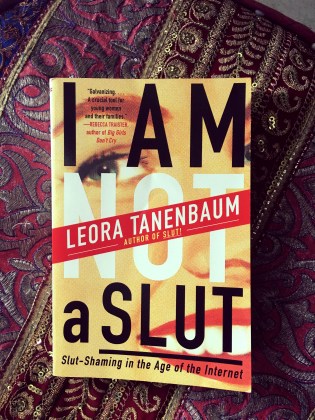
This book is mostly a bunch of stories about girls who have their feelings hurt because they broke a social taboo, usually not because they wanted to, but as the author claims because they were pressured by boys, girls, social media…etc.

It was really hard for me to relate. I have always defined myself and my identity as somebody who is strong, outspoken and who does not give in to outside pressure. I have convictions about my beliefs and about my way of life, regardless of what other people have to say. Most of the stories were about girls who gave into peer pressure or who were very insecure. And while I feel pity for them I don’t really empathize. I feel like there are many stupid things that young girls and boys do in high school. To say that it has ruined your life or has drastically affected you sexually and emotionally is a little dramatic. I feel that men and women need to be accountable for their own actions and shouldn’t blame others because of their own bad decisions. Yes, there is a double standard. Yes, there is sexual inequality. Yes, as females we should not let men dictate why we wear certain clothes and why we decide to have sex with them, but many girls do. Many girls end up marrying dickbags who emotionally, psychologically and physically abuse them and they still stay with them. It’s hard for me to empathize with these types of women. Have a backbone! Stand up for yourself!

She refers to girls who are labeled sluts as girls who have asserted their “agency,” and because they are so powerful they get the label of slut. There is no accountability for their actions or their ethics. I think she is overreaching. Teenage girls make dumb decisions. That has nothing to do with agency or control or good self-esteem. They are impulsive, just like their idiotic male counterparts.

I think we need to empower young girls to know their own minds and their own bodies and to only put their desires into action when they feel certain that it is with someone they can trust. Even as a 28-year-old, I only want to be close to somebody who I know will keep our interactions private. And that’s because my life is nobody’s fucking business. That is what we should be teaching girls. Privacy rights. Not to cry because they got called a name.

There is so much blame being pushed around: Girls are feeling bad because of the pictures in magazines. Girls are doing bad things because of their reality star role models. Girls are doing things and end up hurting themselves because they don’t want to be a prude. Because they want the boy to like them. Because they want their female friends to like them. Because they want everybody to like them. But they’re not doing things because they want to do them and somehow that is everybody else’s fault. It’s the fault of the media. The fault of Madonna and Beyoncé. So now every catty or petty thing that one girl does to another is suddenly blamed on pop culture and social media? How about we say that most teenage boys and girls are a bunch of little shits in regards to each other. And hopefully, they grow out of that. Yes, we should correct their behavior and try to help them not be little brats, but having them not be accountable for their own actions isn’t going to help anything.

Tanenbaum wants me to believe that when my best friend jokingly says “hey slut” or “you’re such a whore” that she’s doing it to make herself feel better. While I don’t doubt there are girls like that out there, I don’t believe this is universal and it shouldn’t be declared as such. I think she is over-reaching with the word slut. I feel like instead of focusing on the label of the word slut, we should focus on raising strong and independent girls. Girls who are not afraid to say no. Girls who don’t care how many likes they get on Facebook or Instagram. Girls who don’t dress a certain way because it’s going to suit the male gaze. Girls who stand up for one another and for themselves. We cannot blame society’s double standard on the word slut. The word is just a product of the double standard. Instead of focusing on a word we should be trying to raise better boys and girls.

There were a few statements I liked in the book. One was:

“It’s true that one of feminism’s central goals is sexual empowerment, but this can only be achieved within a context of sexual equality. Within the culture of slut shaming and the sexual double standard, sexual equality does not exist and young females’ efforts to subvert the system are turned against them.”

The best line in the whole book wasn’t even Tanenbaum’s, but on of the girls she interviewed:

“Being raped is being abused by a man. Being called a slut is being abused by a woman.”

There are also many stories that I think negate responsibility of the girl involved. For example, an excerpt from the book after a story about a girl who started having sex at 13 and got preggo at 18 and had an abortion:

“Gabriella believed that she became pregnant because of having been labeled a slut. She says, ‘I wasn’t aware of it then, but now I know that the label does matter. Young women need to be educated about the whole slut thing so that they won’t think about themselves the way I did.’ ”

My opinion: Bullshit. She became pregnant because she was selfish and ignorant. She was not properly educated about sexual health and safety and that’s why she got pregnant. Not bc someone called her a slut. It’s anecdotes like this that really makes me hate this book and the idea that Tanenbaum is perpetuating the idea that young girls and women have no accountability for their actions. It’s all the fault of a sexual double standard.

I don’t think the word is to blame. Bullying is to blame. Cliques are to blame. Peer pressure is to blame. Sexual inequality is to blame. The double standard is to blame. Bad parents are to blame. Weak-willed boys and girls are to blame. But it’s not all because of the word slut. The word is just a tool used to beat down a girl’s self-esteem and humiliate her. No, we absolutely should never call a girl who has been sexually active or assaulted a slut. We should teach our kids to stand up for others when they witness bullying. We should teach our kids not to use that word, slut. But we can’t blame a person’s choice to be promiscuous, alcoholic or to abuse drugs on a label. I believe firmly in choice and willpower. We need to teach girls to be strong.

I will say this, parents and  young teen boys and girls should read this book. And I mean young, like read it to your 11 year old. I can see how this would be extremely helpful for young teens to read. It would share with them experiences and suffering from other teenagers. It would hopefully make a boy think twice before he pressures a girl into sex and then talk shit about her afterwards. And hopefully it will make a girl think twice about sending Nudie Judies to the cute boy in Algebra.
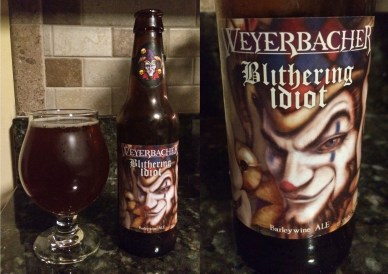
IMG_3492I’m pairing this book with an English Barleywine, Blithering Idiot. Even though it’s a Barleywine it isn’t sweet and drinks more like an ale. It’s the perfect medium-bodied brew to help you trudge through some of the stories regarding sexual abuse or misconduct. The 11% ABV doesn’t hurt either.

Beer Photo Credit: Beer Snob Squad
Format: Paperback.